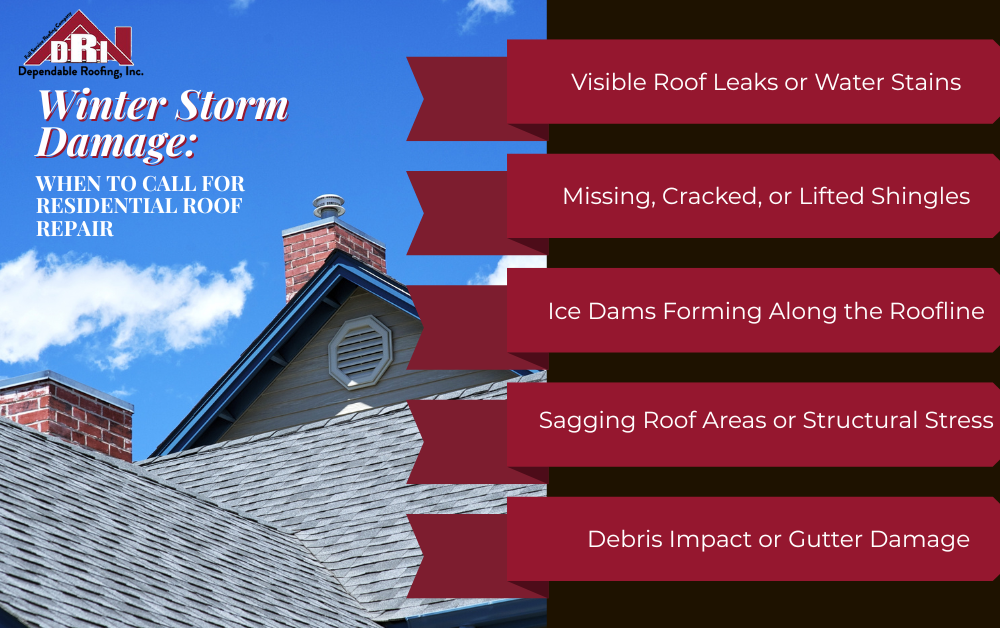
Winter storms have a way of revealing weaknesses in your home long before spring arrives. Heavy snow, relentless wind, and layers of ice can test every inch of your roof, often leaving damage that grows worse if ignored. Understanding exactly when to call for residential roof repair can help you avoid costly structural issues later. Dependable Roofing knows how quickly winter weather can turn a minor problem into a major one, and recognizing the warning signs early can keep your home protected when the cold is at its worst.
Visible Roof Leaks or Water Stains
Recognizing the First Signs of Moisture Intrusion
One of the earliest red flags after a winter storm is the appearance of water stains or localized dampness forming on interior walls or overhead surfaces. These marks may begin subtly, but they rarely stay small for long. Moisture slipping through the roof often travels silently, soaking insulation and wood before you ever notice a stain. When you catch these symptoms early, you have a chance to stop the damage before it spreads deeper into your home. Calling for residential roof repair at this stage prevents a small leak from evolving into a widespread problem.
How Water Compromises Your Home’s Interior
Once water gains access inside, it begins weakening materials that were never intended to handle moisture. Drywall softens, insulation becomes saturated, and wooden beams may slowly start to warp or decay. These effects aren’t always visible at first glance, which is why leaks are considered one of the most urgent winter roofing issues. Acting quickly helps keep the damage contained rather than spiraling into a full-scale renovation. A knowledgeable professional can determine exactly where the problem originates and address it at its source.
Why Timely Repair Makes All the Difference
A fast response is the difference between surface-level repairs and internal damage that requires major reconstruction. Professionals can identify hidden cracks, weak flashing, or worn-out shingles that allowed water inside in the first place. With a proper repair, your home regains its protection from winter’s unpredictability. Taking action the moment you notice water is a prudent step for maintaining a safe and secure home. It’s far easier to correct a minor breach today than to rebuild entire sections of your home later.
Missing, Cracked, or Lifted Shingles
How Winter Weather Breaks Down Shingles
It only takes one strong windstorm or heavy snow event to loosen shingles or tear them away entirely. When you notice curled edges, cracked pieces, or bare patches on your roof, it’s a sign the weather has compromised your home’s first line of defense. Damaged shingles can expose the roof deck, making it vulnerable to moisture and freezing temperatures. Even if the issue seems small, it can worsen quickly over the winter months. Residential roof repair ensures those gaps are sealed before the next storm hits.
Why Shingle Damage Should Not Be Ignored
A missing or broken shingle might not cause immediate leaks, but it creates pathways for water to slip under the surface. Once moisture infiltrates, it can rot the underlying wood or seep into attic spaces. Over time, this type of damage becomes far more expensive to correct. Addressing shingle issues as soon as they appear protects the longevity of your entire roof system. Taking action now prevents what could become a far more complicated problem.
The Long-Term Benefit of Proactive Repairs
Repairing damaged shingles doesn’t just fix today’s issues—it strengthens your roof for future storms. Professionals can inspect neighboring shingles, secure loose materials, and ensure your roof is resealed correctly. This extra attention helps your home withstand the rest of the winter season with confidence. Every repaired shingle contributes to a stronger, more resilient roof. When winter pushes your home to its limits, those proactive steps make a significant difference.
Ice Dams Forming Along the Roofline
Why Ice Dams Signal a Bigger Issue
Ice dams form when warm air inside your home melts roof snow too quickly, only for the runoff to refreeze near the edges. These thick, icy ridges trap water behind them, forcing it beneath the shingles and into the roof’s structure. When you spot these formations, it often means your attic ventilation or insulation isn’t performing the way it should. Ice dams are more than a seasonal inconvenience—they’re an early warning of deeper energy and roofing issues. Addressing them immediately can prevent considerable water damage.
The Hidden Damage Ice Dams Create
While the ice itself looks solid, the real danger lies in the water it prevents from draining correctly. That trapped moisture begins working its way under the roofing materials and into hidden areas of your home. Over time, this can saturate insulation, stain ceilings, and weaken wooden support beams. These issues rarely show themselves right away, which makes ice dams particularly deceptive. Residential roof repair can correct the underlying problems before the damage spreads any further.
The Role of Professional Expertise in Ice Dam Prevention
Removing ice dams safely requires more than knocking them off with a tool—doing so can further damage shingles. Professionals use safe methods to eliminate the buildup while diagnosing ventilation issues that caused the problem. Once repairs are complete, the roof becomes far less vulnerable to repeated damage. By resolving the root cause, you ensure your home stays better protected through the remainder of winter. A well-maintained roof handles temperature swings with far less risk.
Sagging Roof Areas or Structural Stress
Recognizing the Weight of Winter Weather
When snowfall is heavy and persistent, even the strongest roofs can feel the strain. If any part of the roof begins to sag or dip, it’s a clear indication of structural stress that must not be ignored. Snow and ice add tremendous weight, and a weakened section of roofing can deteriorate quickly under that pressure. Catching these changes early reduces the risk of severe structural failure. Residential roof repair becomes urgent the moment sagging is noticed.
The Serious Risks of Structural Weakness
A sagging roof is among the most dangerous winter roofing issues because it suggests the support system is no longer distributing weight properly. Left unaddressed, this can lead to collapses or extensive internal damage. Moisture trapped under snow may worsen the problem by soaking into the roof deck. The longer this condition remains uncorrected, the greater the risk to your home’s integrity. Immediate professional evaluation is essential to ensure your home stays safe.
How Repairs Restore Strength and Stability
Professionals will evaluate the extent of the sagging, identify snow load concerns, and determine whether structural components need reinforcement or replacement. They can also remove excessive snow safely to reduce pressure on the roof. Once repairs are completed, the roof regains the strength necessary to withstand ongoing winter conditions. This type of reinforcement protects both your investment and your family. Acting quickly turns a dangerous situation into a manageable repair.
Debris Impact or Gutter Damage
Identifying Damage Caused by Storm Debris
Winter weather often includes fierce winds that have the potential to hurl branches, ice, and other debris against your roof. Even a single impact can crack shingles or create openings that allow water to penetrate. Gutters, too, take a beating during winter, with ice buildup causing them to warp or detach entirely. After any major storm, it’s important to scan your roof and gutters for signs of stress or damage. What appears minor now can worsen as temperatures fluctuate.
Why Gutters Matter More Than Most Homeowners Realize
Gutters are designed to carry water away from your home, but winter weather often disrupts this crucial function. If gutters become clogged, frozen, or bent out of place, water can pool along the roofline and seep into vulnerable areas. This makes your roof far more susceptible to water intrusion and ice dam formation. Keeping gutters in working condition is a significant part of winter roof maintenance. Residential roof repair often includes restoring or replacing damaged gutter systems.
Why Professional Inspections Provide Peace of Mind
Having a trained expert assess storm-related debris damage ensures nothing is overlooked. Roofing professionals know how to spot cracked shingles, punctures, and misalignments that homeowners might miss. They can clear debris, repair compromised materials, and restore proper drainage pathways. This level of detail protects your home from hidden threats that develop over time. A thorough post-storm inspection helps maintain your roof’s durability throughout winter.
Conclusion
Winter weather pushes your roof to its limits, and knowing when to seek residential roof repair can significantly help you avoid expensive long-term damage. Visible leaks, damaged shingles, ice dams, sagging sections, and debris impacts are all clear signs that your roof needs immediate professional attention. Dependable Roofing provides the expertise and responsiveness homeowners rely on during the harshest months of the year, ensuring your home stays protected and structurally sound.
Reach out to Dependable Roofing today to schedule your winter roof inspection and keep your home safe through every storm ahead.