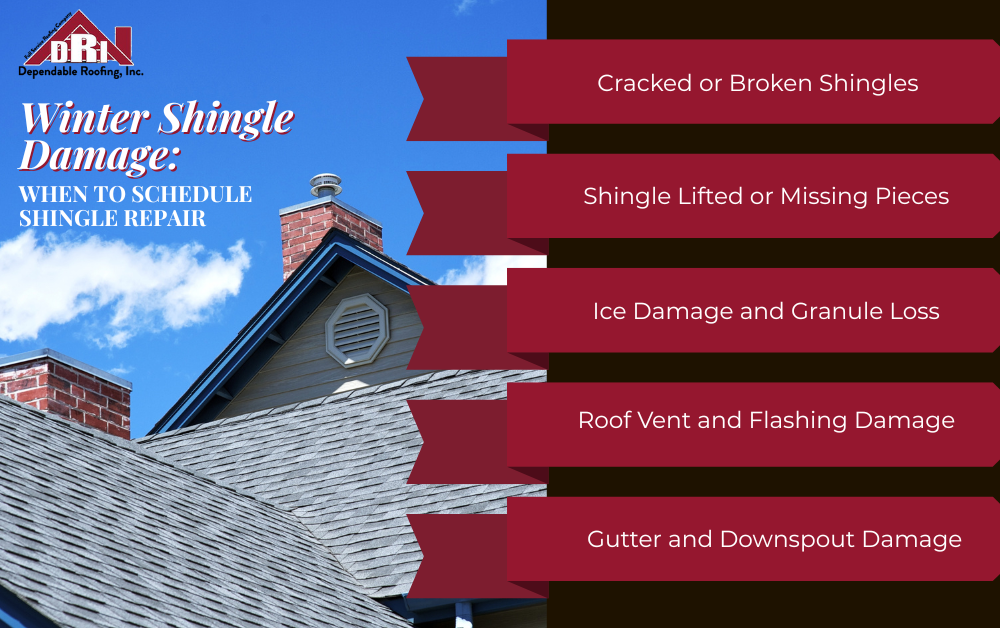
Winter storms can be brutal on your roof, testing every shingle with snow, ice, and biting winds. Many homeowners underestimate the damage that occurs during cold months, assuming minor wear can wait until spring. However, ignoring winter roof issues can lead to water damage, compromise structural integrity, and require costly repairs in the future. Understanding the signs of shingle damage and knowing when to call Dependable Roofing for professional shingle repair is essential to keep your home protected. Acting early with expert assistance ensures that minor issues don’t turn into major headaches as temperatures fluctuate.
Cracked or Broken Shingles
How Cold Temperatures Affect Shingles
Winter’s freezing temperatures can make shingles brittle, increasing the likelihood of cracks or breaks. Snow accumulation and ice formation add weight that can exacerbate existing weaknesses. Even minor cracks allow water to seep beneath the shingles, potentially damaging the underlying roof deck. Identifying these early signs will enable homeowners to address them before further deterioration occurs. Timely shingle repair restores the roof’s protective layer, preventing leaks and water damage. A professional evaluation ensures no damaged areas are overlooked.
Visible Signs of Cracked Shingles
Shingles may curl, split, or lose granules during the winter months. Granule loss reduces the shingles’ ability to repel water, leaving your home vulnerable to moisture infiltration. Curled edges often indicate prolonged exposure to extreme cold combined with moisture cycles. Noticing these signs should prompt a professional inspection. Shingle repair at this stage reinforces the roof’s defense against further storm damage. Acting quickly maintains the roof’s integrity and extends its lifespan.
The Consequences of Ignoring Cracks
Even small cracks can develop into major leaks if left untreated. Water penetration during winter can freeze and expand, causing additional tearing and worsening the problem. Moisture can also reach insulation and ceilings, leading to structural and interior damage. Prompt shingle repair minimizes these risks and ensures the home remains secure. Taking preventative action now is far less costly than repairing widespread damage later. Professional services guarantee that repairs are thorough and long-lasting.
Shingle Lifted or Missing Pieces
Wind Damage and Snow Loads
Winter winds and heavy snow can lift shingles or blow them off entirely. Missing shingles expose the roof deck to rain and melting snow, increasing the risk of leaks. Lifted shingles also allow water to penetrate the roof layers during freeze-thaw cycles. Addressing these problems quickly is critical to avoid further deterioration. Professional shingle repair ensures the damaged area is secured and replaced with properly aligned shingles. Quick action prevents small gaps from becoming larger structural concerns.
Identifying Vulnerable Areas
Edges and ridges are particularly susceptible to lifting, as they bear the brunt of wind pressure and ice buildup. If you notice shingles that appear loose or uneven, it’s a warning sign that your roof’s seal has been compromised. Waiting until spring could mean water has already seeped into the roof deck, causing hidden damage. Timely shingle repair corrects these issues before they escalate. Ensuring proper alignment and attachment restores the roof’s ability to shed snow and water effectively.
Preventing Future Damage
Repairing lifted or missing shingles now reduces the risk of repeated damage in subsequent storms. Roof professionals can reinforce vulnerable areas, ensuring shingles are secure and water-tight. Preventative shingle repair saves homeowners money and preserves the roof’s overall durability. Addressing damage promptly also minimizes potential interior issues, such as leaks or mold growth. A roof that receives consistent maintenance is more resilient against the harshest effects of winter weather.
Ice Damage and Granule Loss
How Ice Affects Shingle Longevity
Ice forming on shingles can create friction and push water beneath them, accelerating wear. Granules—the protective layer of shingles—often erode due to freeze-thaw cycles and ice buildup. Once granules are missing, shingles lose their effectiveness in shielding the roof from UV rays, water, and wind. Shingle repair replaces or reinforces affected shingles to restore proper protection. Addressing ice damage early helps prevent leaks and preserves the roof’s lifespan. Neglecting granule loss can lead to more extensive winter damage over time.
Spotting Granule Loss
Granule loss often appears as bare patches on shingles or as small deposits in gutters after storms. This loss weakens shingles, making them brittle and more prone to cracking or lifting. Regularly inspecting shingles during the winter months can reveal these issues before they compromise your roof. Professional shingle repair restores the integrity of your roof and prevents water infiltration. Early action ensures shingles continue to perform as intended.
Repairing Ice-Related Damage
Repairing ice damage involves securing shingles, replacing lost granules, and ensuring proper water drainage. A roofing professional can also inspect for underlying vulnerabilities that ice may have exposed. Timely shingle repair strengthens the roof and reduces the likelihood of future issues during winter. Maintaining a strong roof structure ensures your home stays safe and free from leaks during severe conditions. Proactive measures now save high costs later.
Roof Vent and Flashing Damage
How Winter Weather Impacts Roof Flashing
Flashing and vents are critical components that seal the roof where shingles meet chimneys, skylights, or vents. Heavy snow, ice, and wind can loosen or crack flashing, creating small openings where water can seep in. Even minor gaps can quickly escalate into leaks that affect attic spaces and ceilings. Timely shingle repair often involves inspecting and reinforcing these vulnerable points. By addressing flashing damage early, you prevent costly interior damage and maintain the roof’s overall integrity. Roof professionals ensure that every joint is secure and properly sealed.
Identifying Vent Damage
Vents can shift, crack, or become obstructed during severe winter storms. This can compromise ventilation and allow moisture to accumulate under the shingles. Homeowners should look for signs such as water stains near vent areas or unusual condensation in the attic. Professional shingle repair includes checking vents and replacing or sealing damaged units. This ensures that air circulates properly and that shingles stay dry and protected. Maintaining vent integrity is a key step in winter roof maintenance.
Preventative Measures for Flashing and Vents
Regular inspections before and after winter storms help catch issues before they worsen. Professionals can apply sealants, replace worn materials, and reinforce areas prone to ice and wind damage. Proactive shingle repair ensures flashing and vents remain secure throughout the season. Proper maintenance reduces the risk of leaks, mold, and structural damage. By keeping these critical components in top condition, your roof is better prepared for future storms.
Gutter and Downspout Damage
The Role of Gutters in Winter Protection
Gutters and downspouts direct water away from your home, preventing ice and water from accumulating along the roofline. Winter storms, ice dams, and debris can bend, crack, or detach gutters, creating drainage problems. Without proper function, water may pool around the foundation or seep under shingles. Timely shingle repair often coincides with gutter inspection to prevent related damage. Ensuring gutters are clear and intact protects both your roof and your home’s structural foundation. Professionals can efficiently assess and reinforce these systems.
Detecting Damage After Storms
Ice, snow, and wind often leave telltale signs of gutter stress, such as sagging sections, dents, or displaced downspouts. Water overflow or ice buildup can also indicate that the gutter system is compromised. Homeowners should check for puddles near the foundation or icicles forming along the eaves. Professional shingle repair includes a close evaluation of gutters to ensure proper water flow. Addressing these problems prevents water from undermining shingles, flashing, or the roof deck. Well-maintained gutters complement a strong roof system.
Repairing and Reinforcing Gutters
Gutter repair may involve straightening, resecuring, or replacing damaged sections. Professionals also ensure downspouts are clear and correctly angled to carry water away from your home. Coupling shingle repair with gutter maintenance maximizes your roof’s resilience against winter storms. Preventative work reduces the risk of leaks, water damage, and costly future repairs. By keeping both shingles and gutters in peak condition, your home stays protected through the harshest months.
Conclusion
Winter storms test every aspect of your roof, from individual shingles to structural support. Cracked, lifted, missing, or ice-damaged shingles can lead to leaks, interior damage, and costly repairs if not addressed promptly. Scheduling professional shingle repair ensures your roof remains strong, secure, and able to withstand harsh winter conditions. Dependable Roofing provides expert inspections, precise maintenance, and long-lasting solutions designed to protect your home throughout the season.
Contact Dependable Roofing today to schedule your shingle repair and safeguard your home against winter damage before the next storm arrives.