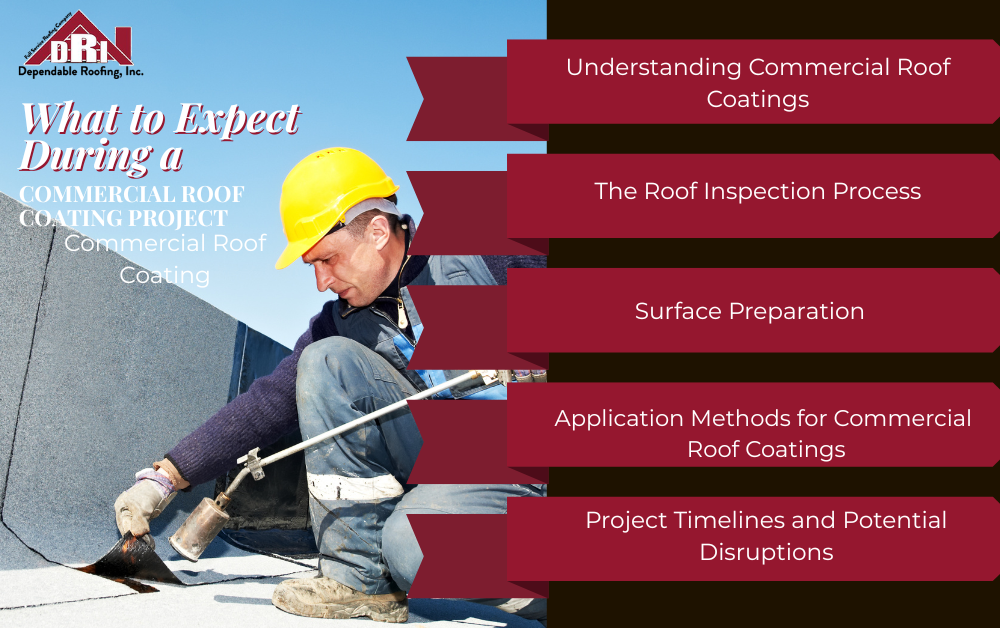
As roofs age, property owners often look for cost-effective solutions that can prolong the vitality of their existing roofing system without the expense and disruption of a complete replacement. One of the most popular options is the application of commercial roof coatings.
At Dependable Roofing, property owners often ask what the coating process involves and how it may affect daily business operations. Understanding each stage of the project can help building owners prepare for the work and feel confident about the investment they are making in their property.
Understanding Commercial Roof Coatings
Before discussing the project process, it is important to understand what commercial roof coatings are and why they are used.
Roof coatings are liquid-applied protective membranes designed to restore and protect existing roofing systems. Once cured, they create a seamless barrier that helps defend against UV rays, moisture intrusion, weather damage, and general wear and tear. Commercial roof coatings can also improve energy efficiency by reflecting sunlight and reducing heat absorption.
While every project is unique, most coating applications follow a similar sequence: inspection, preparation, application, and final evaluation.
The Roof Inspection Process
A successful coating project begins with a thorough roof inspection.
Evaluating the Existing Roof Condition
Before recommending commercial roof coatings, roofing professionals must determine whether the existing roof is a suitable candidate. Not every roof qualifies for a coating system, particularly if there is significant structural damage or extensive deterioration.
During the inspection, contractors typically evaluate:
- Overall roof condition
- Existing roofing material
- Signs of leaks or water infiltration
- Membrane damage
- Flashing condition
- Ponding water areas
- Drainage performance
- Previous repair work
The goal is to identify any issues that could interfere with coating performance.
Identifying Necessary Repairs
A roof coating is not designed to hide or fix major roofing problems. Any existing damage must be addressed before the coating is applied.
Common repairs may include:
- Replacing damaged roofing sections
- Repairing seams and flashing
- Fixing punctures or cracks
- Addressing drainage concerns
- Reinforcing weak areas
These repairs help ensure the coating adheres properly and performs as intended.
Moisture Assessment
Many roofing contractors conduct moisture scans or inspections to determine whether water has become trapped beneath the roofing system.
Excess moisture can compromise the effectiveness of commercial roof coatings, making this step essential for long-term success.
Surface Preparation
Once the roof passes inspection and repairs are completed, preparation begins.
Roof Cleaning
Surface preparation is one of the most important stages of the entire project.
Over time, commercial roofs accumulate:
- Dirt
- Dust
- Debris
- Mold
- Algae
- Grease
- Environmental contaminants
These materials can prevent proper adhesion if they are not removed.
Contractors typically use pressure-washing equipment and specialized cleaning solutions to prepare a clean surface for coating application.
Repairing and Reinforcing Problem Areas
After cleaning, technicians revisit any areas that require additional attention.
These areas may include:
- Seams
- Penetrations
- Roof edges
- HVAC curbs
- Drainage points
- Flashing systems
Many projects involve reinforcing vulnerable areas with specialized fabrics or sealants before the coating process begins.
Allowing the Surface to Dry
The roof must be completely dry before coatings are applied.
Moisture entrapped under the coating can lead to adhesion issues and reduce overall performance. Depending on weather conditions, contractors may allow the roof surface to dry for several hours or longer before proceeding.
Application Methods for Commercial Roof Coatings
After preparation is complete, the coating application process can begin.
Selecting the Right Coating System
Different roofing systems require different coating products.
Common coating types include:
Acrylic Coatings
Acrylic coatings deliver reliable UV defense while helping to keep roof surfaces cooler through increased reflectivity. They are often used on roofs where energy efficiency is a priority.
Silicone Coatings
Silicone coatings perform exceptionally well in areas prone to standing water and frequent rainfall.
Polyurethane Coatings
Polyurethane coatings offer excellent durability and impact resistance, making them ideal for roofs exposed to heavy foot traffic.
The appropriate product depends on the building’s location, climate, roof type, and performance goals.
Spray Application
Many commercial roof coatings are applied using specialized spray equipment.
Spray application offers several benefits:
- Faster installation
- Consistent coverage
- Seamless protection
- Efficient application on large surfaces
Professional installers carefully monitor coating thickness to ensure the system meets manufacturer specifications.
Roller Application
In some situations, contractors use rollers rather than spray equipment.
Roller application may be preferred for:
- Smaller roofs
- Areas with limited access
- Detailed sections requiring precision
- Wind-sensitive environments
Some projects utilize both spray and roller techniques to achieve optimal results.
Multiple Coating Layers
Many coating systems require more than one layer.
The process may include:
- Primer application
- Base coat application
- Reinforcement where necessary
- Finish coat application
Each coating contributes to the overall performance and longevity of the system.
Curing Time
After application, the coating must cure properly.
Curing times vary based on:
- Product type
- Temperature
- Humidity
- Weather conditions
Contractors closely monitor curing conditions to ensure the coating develops maximum strength and durability.
Project Timelines and Potential Disruptions
One of the major advantages of commercial roof coatings is that they generally create less disruption than a complete roof replacement.
Typical Project Duration
Most coating projects can be completed relatively quickly.
Factors affecting project length include:
- Roof size
- Roof complexity
- Existing roof condition
- Required repairs
- Weather conditions
- Coating system selected
Smaller projects may take only a few days, while larger commercial facilities could require one to several weeks.
Business Operations During Installation
Many businesses remain fully operational throughout the coating process.
Because contractors work primarily on the roof surface, interior disruptions are typically minimal.
Employees and customers can often continue using the building with little interruption.
Noise Considerations
Some temporary noise may occur during:
- Pressure washing
- Surface preparation
- Equipment setup
- Spray application
However, these disturbances are generally far less significant than those associated with a complete roof replacement.
Weather Delays
Inclimate weather is a significant variable that has the ability to affect your project schedules.
Rain, excessive humidity, and extreme temperatures can delay application or curing.
Experienced contractors monitor forecasts closely and adjust schedules when necessary to ensure quality results.
Safety Measures
Throughout the project, roofing crews implement safety practices designed to shield both workers and building occupants.
Safety practices often include:
- Controlled work zones
- Fall protection systems
- Equipment safeguards
- Restricted roof access
- Site communication protocols
These measures help keep the project running smoothly and safely.
Final Inspection and Quality Assurance
After the coating has cured, contractors conduct a final inspection.
Verifying Coverage
The inspection process confirms:
- Proper coating thickness
- Complete coverage
- Seam integrity
- Repair effectiveness
- Compliance with manufacturer requirements
Warranty Documentation
Many commercial roof coatings come with manufacturer and contractor warranties.
Following project completion, building owners typically receive documentation outlining:
- Warranty terms
- Maintenance recommendations
- Inspection schedules
- Product information
Regular inspections and maintenance help maximize the lifespan of the newly coated roof.
Conclusion
Investing in commercial roof coatings can be an effective way to extend the life of an existing roofing system while improving protection, energy efficiency, and overall performance. Understanding the inspection process, preparation requirements, application methods, and project timeline helps building owners know exactly what to expect before work begins.
At Dependable Roofing, every commercial roof coating project is approached with meticulous planning, attention to detail, and a commitment to long-term results. From the initial roof evaluation to the final quality inspection, experienced professionals help ensure your roofing system receives the protection it needs for years to come.
Ready to learn if commercial roof coatings are right for your building? Contact Dependable Roofing today to schedule a professional roof assessment and discover how a customized coating solution can help protect your investment while extending the life of your commercial roof.