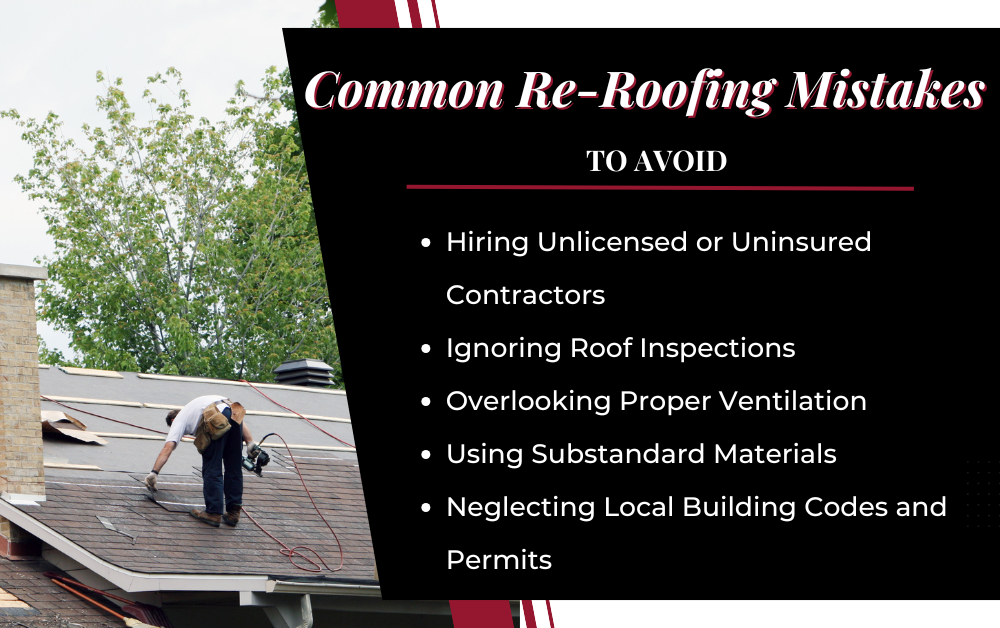
Re-roofing is one of the most essential home improvement projects a homeowner can undertake, but if mistakes occur during the project, it can create high repair costs and reduce the longevity of your roof. Many homeowners underestimate the complexity of re-roofing and the importance of proper planning, materials, and contractor selection. At Dependable Roofing, we know how crucial it is to avoid common errors that can compromise the quality and safety of a roofing project. Understanding these pitfalls before starting your project ensures that your home remains protected, your investment is secure, and the re-roofing process runs smoothly. Proper guidance and professional expertise are essential for a successful re-roofing project.
Hiring Unlicensed or Uninsured Contractors
Risks of Unlicensed Contractors
Opting for a contractor without appropriate legal authorization and insurance protection can have serious consequences during a re-roofing project. Unlicensed contractors may lack the experience or training to properly install a roof, leading to poor artistry that can result in leaks or structural damage. Homeowners may also be held financially responsible if accidents or injuries occur on their property. Licensed and insured contractors demonstrate credibility, professionalism, and accountability, giving you confidence in their work. Always verify credentials, check references, and confirm insurance coverage to ensure a safe and compliant re-roofing experience. Making the right choice from the start protects both your home and your investment.
Legal and Financial Implications
Contracting with someone without verified licensing or insurance can produce unexpected legal and financial issues. If property damage or worker injuries occur, the homeowner could be liable for repair costs or medical bills. This risk often outweighs any potential savings from hiring a cheaper, unlicensed contractor. A licensed contractor follows industry standards and local building codes, reducing the chance of mistakes that could lead to legal trouble. Ensuring the contractor is insured adds another layer of protection for your home and finances. This step is critical for a secure and worry-free re-roofing project.
Ensuring Safe and Compliant Work
Verifying the credentials of your contractor is key to a successful re-roofing project. Licensed, insured professionals are more likely to follow proper installation practices and safety protocols. Checking references and certifications ensures that the contractor has a history of reliable and high-quality work. This due diligence minimizes potential problems and safeguards your home’s structural integrity. Hiring a trusted professional creates peace of mind and helps ensure that your new roof will perform as expected for years to come. Safety, compliance, and quality are all connected to proper contractor selection.
Ignoring Roof Inspections
Hidden Structural Issues
Skipping a comprehensive roof inspection before re-roofing can leave serious problems undetected. Issues like damaged decking, leaks, or mold may not be visible until after installation, leading to expensive repairs. Proper inspections identify weak points and ensure that underlying issues are resolved before the new roof is installed. Addressing these problems early prevents future damage and extends the life of your roof. Homeowners benefit from knowing the complete condition of their roof before committing to a re-roofing project..
Increased Costs and Repairs
Ignoring potential structural problems often leads to higher costs over time. Repairs that could have been done during the re-roofing process may require additional labor, materials, and disruption later. Minor issues like leaks or water damage can escalate if left untreated, resulting in more extensive and expensive repairs. Conducting a proper inspection ensures that the project stays on budget and avoids unexpected costs. Preventative measures save time, money, and stress. Investing in an inspection up front protects your re-roofing investment.
Importance of Pre-Re-Roofing Assessment
A detailed pre-re-roofing inspection helps confirm the roof’s integrity and readiness for replacement. Professionals check for damaged shingles, structural weaknesses, ventilation problems, and other factors that could affect the project. This evaluation ensures that the new roof will be installed on a sound foundation, maximizing its lifespan and performance. Homeowners gain confidence knowing that all potential issues have been addressed before construction begins. Proper assessment is a critical step in a successful re-roofing process and helps avoid costly surprises.
Overlooking Proper Ventilation
Heat and Moisture Issues
Neglecting proper attic ventilation during re-roofing can lead to significant heat buildup and moisture problems. Excess heat can warp shingles, reduce their lifespan, and affect your home’s energy efficiency. Moisture accumulation can cause mold, rot, and damage to the roof structure. Proper air circulation contributes to maintaining consistent temperatures and prevents these issues. Addressing ventilation during re-roofing ensures the roof functions correctly and protects your home from long-term damage.
Energy Efficiency Concerns
Poor ventilation can impact the overall energy efficiency of your home. Without adequate airflow, your home’s temperature control system works overtime to sustain comfort, resulting in greater utility bills. Re-roofing provides an opportunity to improve ventilation, which decreases energy expenditure and maintains a balanced indoor living environment. Well-ventilated roofs also reduce strain on roofing materials, preserving their integrity. Proper airflow is essential for a sustainable, long-lasting roofing system.
Protecting Roof Integrity
Ensuring proper attic ventilation during a re-roofing project protects the roof’s structural and material integrity. Balanced airflow prevents moisture buildup, reduces the risk of mold, and helps shingles last longer. Ventilation also contributes to overall home comfort and energy efficiency. Professionals assess and adjust ventilation as needed during installation to maximize the roof’s performance. Incorporating this step ensures a durable and reliable re-roofing project that will last for decades.
Using Substandard Materials
Short-Term Savings, Long-Term Costs
Choosing low-quality roofing materials may save money initially, but it often leads to premature deterioration. Cheaper shingles are more likely to crack, warp, or leak under normal weather conditions. A financial advantage at first may quickly be offset by the cost of repairs or early replacement. Investing in premium roofing materials ensures durability, resilience, and long-term protection for your home. Proper materials are critical to maximizing the lifespan of a re-roofing project.
Reduced Durability and Lifespan
Substandard materials do not provide the same level of protection against wind, rain, hail, and sun exposure. Over time, inferior shingles may fail, resulting in leaks and water damage. Using high-quality materials ensures that your roof withstands environmental challenges while maintaining its appearance and function. A durable roof protects your home, reduces maintenance needs, and preserves its value. Material quality directly impacts both performance and longevity.
Investing in Quality
Selecting premium roofing products is an investment in your home’s future. High-quality shingles, underlayment, and ventilation systems work together to create a long-lasting roof. Professional installation of these materials guarantees maximum performance and reliability. Homeowners can relax knowing their property and investment are shielded. Choosing quality materials is a cornerstone of successful re-roofing.
Neglecting Local Building Codes and Permits
Avoiding Legal Issues
Failing to obtain permits or follow local building codes can create serious legal and financial complications. Improperly installed roofs may require removal or rework to meet compliance standards. Homeowners may face fines, delays, or other penalties for noncompliance. Adhering to local codes ensures a smooth and legal re-roofing process. Following regulations protects both the homeowner and the integrity of the project.
Ensuring Safety Standards
Building codes are in place to maintain safety, structural integrity, and proper installation practices. Ignoring these requirements can compromise the durability of the roof and the protection of the home. Licensed contractors are familiar with local codes and ensure every aspect of re-roofing meets these standards. Compliance prevents future problems and guarantees that the roof is safe for years to come.
Smooth and Compliant Projects
Obtaining permits and following codes ensures that the re-roofing project proceeds without unnecessary interruptions. Compliance avoids legal issues, protects your investment, and guarantees inspection approvals. Working with professionals who understand local requirements ensures a seamless, worry-free project. Proper adherence to regulations contributes to a durable and well-built roof that lasts.
Conclusion
Embarking on a re-roofing project involves a significant investment and careful decision-making, high-quality materials, and professional expertise. Common mistakes such as hiring unlicensed contractors, ignoring inspections, overlooking ventilation, using substandard materials, or neglecting permits can compromise your roof’s durability and your home’s safety. At Dependable Roofing, we help homeowners avoid these pitfalls, ensuring every project is safe, compliant, and long-lasting. By addressing these issues proactively, your re-roofing project will protect your home, enhance energy efficiency, and maintain structural integrity. Trusting professionals guarantees peace of mind and a roof that performs for decades.
Contact Dependable Roofing today to schedule your consultation and ensure your re-roofing project is done correctly from start to finish.